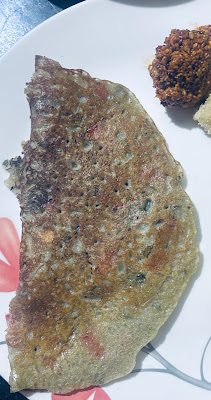
We often say we “taste” food, but a good meal engages much more than just our taste buds. In South Indian vegetarian cooking, the colors, aromas, sounds, textures, and flavors all come together to make the experience memorable.
Let’s take a look at how all five senses come into play in a South Indian kitchen.
Sight: A Feast Before the First Bite
A traditional South Indian meal is full of color. Green coconut chutney, golden sambar, bright red pickle, soft white idlis, and hot rice topped with a little ghee — every dish adds something to the plate.
Whether served on a banana leaf or a steel thali, the variety itself makes you want to dig in.
Smell: The Aroma of Home
Some of the most familiar South Indian aromas come from the simplest ingredients.
Curry leaves hitting hot oil, mustard seeds popping in a tempering, freshly roasted spices, or a pot of rasam simmering on the stove — these aromas tell you what’s cooking before you even see the food.
They are also what make many South Indian dishes instantly comforting and familiar.
Sound: Listen to the Food
Cooking has its own sounds.
The sizzle of dosa batter on a hot tawa tells you the pan is ready. As the dosa cooks, the sound changes as it turns crisp around the edges.
Even sambar has its own rhythm. A gentle simmer means it’s cooking well, while too much bubbling can be a sign to lower the heat.
You don’t always need a timer when you learn to listen to your food.
Taste: Where It All Comes Together
This is where South Indian cooking really stands out — in the balance of flavors.
Sambar brings together the mild sweetness of vegetables, the tang of tamarind, the warmth of spices, and the richness of dal. Rasam is lighter, with pepper, cumin, tomato, and tamarind coming together in a bright, comforting broth.
A crisp dosa with coconut chutney gives you the contrast of something crunchy with something cool and creamy. A little pickle adds heat, salt, and sourness to a simple meal of rice and dal.
It’s not about making every dish intensely flavored. It’s about how the flavors work together.
Touch: The Feel of Food
Texture is just as important as flavor.
The softness of a freshly steamed idli, the crisp edges of a dosa, the crunch of sandige, or the smooth texture of payasam — each adds something different to the meal.
And when you eat rice with your hands, you can feel the warmth and texture as you mix it with sambar, rasam, or dal. It becomes a natural part of the eating experience.
A Meal That Brings Everything Together
A South Indian vegetarian meal is about more than individual dishes. It’s about how everything comes together — the colors on the plate, the aroma from the kitchen, the sound of food cooking, the balance of flavors, and the textures in every bite.
The next time you make dosa, sambar, rasam, or even a simple bowl of rice and dal, take a moment to notice all of it.
Look at the food. Smell the spices. Listen to the cooking. Notice the textures. And, of course, taste.
Because good South Indian food isn’t complicated. It’s about simple ingredients, good technique, and flavors that work beautifully together.
And as you cook, don’t rush. Let your senses guide you.
Which South Indian dish speaks to your soul the most? Let me know!
Continue Reading
Thanks for visiting ...


.JPG)